Do I Need a Permit to Rebuild After Water or Fire Damage in Montgomery?
In most cases, yes — the City of Montgomery generally requires a building permit to construct, enlarge, alter, repair, or change the occupancy of a building or structure, which includes much of the repair and reconstruction work that follows water or fire damage. Whether a specific project requires a permit, however, depends on the actual work, the property's jurisdiction, and the applicable code. This guide explains the general framework and what to confirm with the local building department. We do not invent permit fees, processing timelines, or exemptions, and we direct you to the responsible authority for a definitive answer.
What the Question Involves
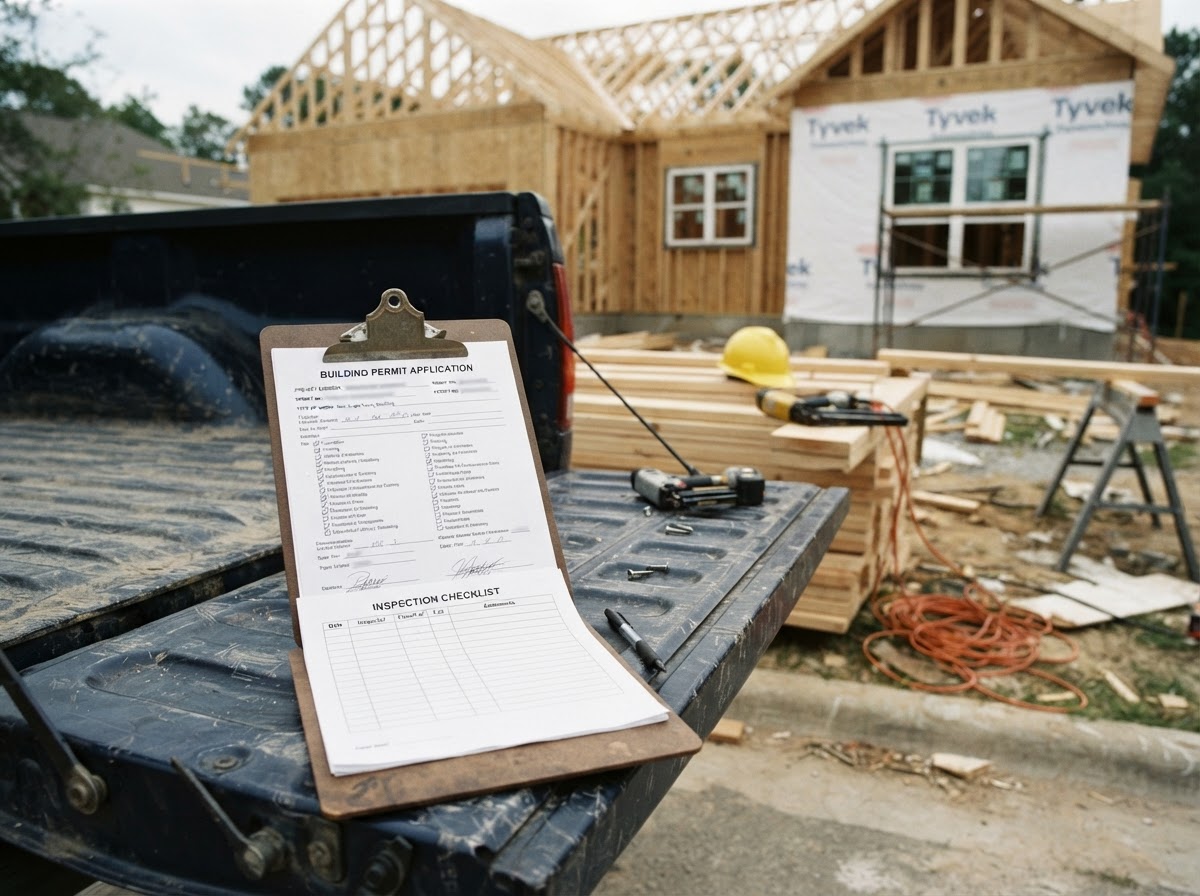
A building permit is the local government's authorization to perform specific construction, repair, or alteration work, and it is tied to inspections that confirm the work meets the adopted building code. The City of Montgomery's Inspections Department states that a permit is required for most building, electrical, plumbing, gas, and mechanical projects, and that obtaining permits, inspections, and approvals helps ensure that licensed contractors perform the work to minimum standards.
After water or fire damage, the repair work often crosses several of these categories at once: replacing drywall and framing (building), repairing wiring (electrical), replacing plumbing lines (plumbing), and replacing a damaged HVAC component (mechanical). Each can trigger its own permit and inspection. The City of Montgomery has adopted the 2024 International Building Code, International Residential Code, and International Existing Building Code, among others, as the applicable codes.
A useful distinction is between mitigation — the urgent drying and stabilization work a restoration provider performs — and repair and reconstruction, which typically requires permits and inspections. Mitigation generally does not require a building permit, but the reconstruction that follows it usually does. The boundary can depend on the work, so it is worth confirming with the building department.
Key Facts and Decision Factors
Several factors shape whether a permit is required. The first is the type of work: the City of Montgomery requires a permit to construct, move, enlarge, alter, demolish, repair, or change the occupancy of a building or structure. Cosmetic work that does not alter a structure may differ from work that replaces framing, wiring, plumbing, or mechanical systems.
The second is the jurisdiction. The City of Montgomery's permitting authority extends to the city limits and a police jurisdiction that reaches roughly three miles beyond them. Outside that area, Montgomery County has its own building permit requirements for structures, and the Town of Pike Road has its own jurisdiction. The correct authority depends on where the property sits, and the rules are not identical.
The third is the applicable code and any floodplain status. The City of Montgomery has a flood damage prevention ordinance, and work in a mapped flood area can trigger additional requirements, including elevation considerations. Flood-zone status is specific to the property address and should be checked with the FEMA Flood Map Service Center. The fourth is who performs the work: the City notes that permitting helps ensure licensed contractors perform the work, and contractor licensing is a separate requirement verified through the State of Alabama licensing boards.
Practical Property Considerations
A few practical questions help frame the permitting question. What exactly will the repair involve — drywall and finish, or framing, wiring, plumbing, and mechanical replacement? Where is the property located — inside the City of Montgomery, in its police jurisdiction, or in Montgomery County or another municipality? Is the property in a mapped flood area, which can add requirements?
It helps to understand that restoration and reconstruction are different phases with different permitting profiles. Drying a property and removing saturated materials is mitigation; rebuilding walls, replacing wiring, and reinstalling flooring is reconstruction that typically requires permits and inspections. A restoration provider can frame where mitigation ends and reconstruction begins, but the permitting decision and the reconstruction work itself are the owner's and the qualified contractor's responsibility.
We do not recommend that occupants perform structural, electrical, plumbing, or mechanical work without the appropriate permit and a qualified contractor. Unpermitted work can lead to a stop-work order and complications when the property is sold, as buyers and lenders often require proof that improvements were permitted and inspected. Where the work is unclear, confirm with the building department before beginning.
Montgomery and Alabama Context
In Montgomery, the City of Montgomery Inspections Department administers building, electrical, plumbing, gas, and mechanical permits, and the City has adopted the 2024 International code series. The City's Inspection & Permit FAQ notes that permits are required for most building, electrical, plumbing, gas, and mechanical projects, and that permits expire if work is not commenced within 180 days. Residential plan review is typically completed within a number of working days, though timelines can vary with the project.
Outside the City of Montgomery and the Town of Pike Road police jurisdictions, Montgomery County administers its own building permits for structures, with separate requirements for flood-prone areas under the County's floodplain prevention ordinance. The State of Alabama licenses contractors through its licensing boards, which is a separate matter from the local permit. We do not invent permit fees, processing timelines, or exemptions; confirm the current requirements for your specific project with the responsible authority.
Limitations and Common Misunderstandings
A common misunderstanding is that mitigation work requires a building permit. It generally does not — drying and material removal are not the construction, alteration, or repair that triggers a permit. But the reconstruction that follows mitigation usually does, and confusing the two can lead to unpermitted repair work.
Another is that a single permit covers everything. It often does not. A fire or water repair that involves framing, electrical, plumbing, and mechanical work may require separate permits and separate inspections for each trade. Assuming one permit covers the whole project can leave work unpermitted.
A third is that the City of Montgomery's rules apply everywhere in the area. They do not. The County and other municipalities have their own jurisdictions and requirements, and floodplain status adds another layer. We do not invent specific fees, timelines, or exemptions, and we direct you to the responsible building department for a definitive answer for your property. We do not provide legal advice on permitting.
Permitting Questions in Montgomery
Does the City of Montgomery require a permit to repair water or fire damage?
Does drying and removing damaged materials require a permit?
What if my property is outside the City of Montgomery?
Does floodplain status affect permitting?
Does one permit cover the whole repair project?
Can a restoration company pull the permits for reconstruction?
Where do I confirm the current permit requirements for my project?
Where to Verify These Points
These official resources provide current, authoritative information for the claims above. Requirements and flood-zone status are specific to the property and the applicable jurisdiction — confirm the details that apply to your situation.
Request a Restoration Assessment for Your Montgomery Property
If you have water or fire damage in Montgomery and are planning repairs, tell us the scope and the property location. We can frame where mitigation ends and reconstruction begins — without pulling permits, without performing permitted trade work, and without inventing fees or timelines. Confirm permitting with the responsible building department for your property.