Restoration Assessment for the Garden District, Montgomery, Alabama
The Garden District's period homes — with original plaster and lath, ornate woodwork, and roof and gutter systems typical of early-twentieth-century construction — raise restoration questions that differ from newer neighborhoods. A roof leak traveling an older cornice, smoke settling into carved millwork, or moisture behind plaster each require careful assessment rather than a one-size approach. This page describes the water, fire, and mold assessment work a Garden District property owner may want evaluated and how to request it. Coverage and timing for this area are confirmed through inquiry, not assumed from the district name.
What Garden District Property Owners Often Evaluate
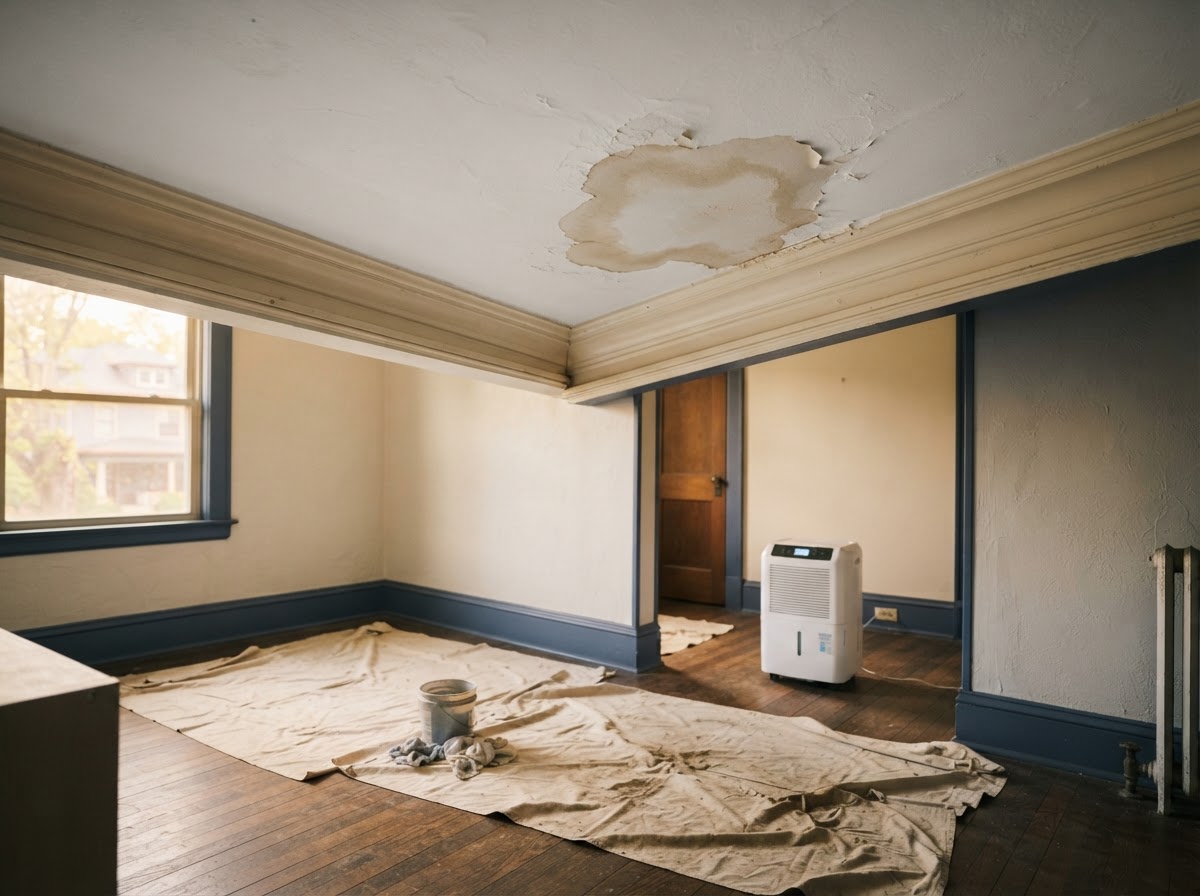
The Garden District is one of Montgomery's most recognizable historic areas, and its construction details shape the restoration questions that arise. Original plaster and wood lath, decorative millwork, older roof and gutter lines, and mature trees over the roof all mean that water intrusion, smoke, and moisture can behave differently than in a newer building. A gutter overflow behind a cornice, a roof leak into an attic, or a pipe leak inside an original wall each raise distinct assessment considerations.
Two ideas are worth keeping separate. Period materials — plaster, lath, heart-pine flooring, and carved trim — can hold moisture and residue in ways modern drywall and trim do not, and they often warrant a more conservative approach to removal. Source repair — fixing the roof, gutter, or pipe that caused the damage — is the separate work of a qualified roofer or plumber. An assessment frames the restoration scope around that repair, it does not perform it.
Roof Leaks, Plaster, and Water Intrusion
In the Garden District, water intrusion often starts at the roof or gutter system and travels into an attic, down an interior wall, or behind plaster before it appears inside. Water extraction addresses any standing water; structural drying is the separate process of drawing moisture out of wet plaster, framing, and lath and confirming with monitoring that the assembly is actually dry. Plaster in particular can hold moisture long after the surface feels dry, so drying here is confirmed by readings rather than appearance.
Roof and gutter source repair is the work of a qualified roofing contractor; plumbing source repair is the work of a licensed plumber. We help frame the water-damage assessment and the drying scope, and we do not perform or advertise those trade services without verification. Where period materials are affected, an assessment can also help weigh which materials can be dried and retained versus which require careful removal.
Smoke in Ornate Woodwork and Ductwork
Smoke damage in a period home reaches well beyond char. Soot and odor settle into carved millwork, draperies, and original ductwork, and porous ornamental surfaces can hold residue that non-porous walls do not. Cleaning carved woodwork without setting soot, and addressing odor that has moved through the HVAC system, are different tasks from surface soot cleaning.
Smoke odor reduction is a separate process from cleaning, and we do not promise complete, permanent elimination — the outcome depends on how deeply residue penetrated and whether charred or saturated materials are removed. Thermal fogging, hydroxyl, and ozone each have suitability and safety limits; per EPA guidance, ozone at concentrations effective for many odors requires evacuation and is not safe for occupied spaces. Safe occupancy after a fire is a question for qualified professionals, not odor reduction alone.
Mold Behind Plaster and Original Walls
Slow roof or plumbing leaks behind original plaster and lath can keep wall cavities damp long enough for mold to establish before it is visible. Mold assessment here is about locating the moisture source and the extent within the wall assembly; remediation is the separate work of removing affected materials, containing the work area, and correcting the underlying moisture condition so it does not recur.
We do not identify mold species by color or diagnose health effects. Per CDC guidance, the color of mold does not indicate how hazardous it is, and all mold should be addressed with respect to potential health effects and removal. Controlling the moisture source is the key to controlling mold — cosmetic cleanup alone does not address the underlying condition.
Historic and Multi-Use Property Considerations
Some Garden District properties include commercial or mixed-use space — a historic building with a ground-floor office or a property divided into units. Those situations raise documentation, access, and coordination questions that a single-family residence may not, and the restoration scope may need to account for occupancy, shared systems, and applicable building considerations for a historic structure.
We do not imply that every specialized service is available, and we do not advertise biohazard, regulated remediation, or reconstruction capabilities without verification. Where a scope requires a qualified trade or a regulated specialist, the assessment helps identify who needs to be involved.
What Happens When You Request an Assessment
A request lets you describe the issue, the property location, the service category, and the urgency. That information is reviewed under our actual workflow — we do not promise dispatch, a specific inspection time, acceptance, or a same-day appointment until coverage and scheduling are confirmed. An inquiry is a request for contact and assessment, not a confirmed appointment or a guarantee of service.
For a Garden District address, please provide the street location rather than the district name, since the address determines whether the property falls within our service reach. If period materials are involved, noting original plaster, ornate woodwork, or historic features helps frame the appropriate approach.
Garden District Restoration Assessment Questions
Do you have a local office in the Garden District?
Can you repair the roof or plumbing that caused the damage?
How is drying confirmed in a home with plaster walls?
Will smoke odor be completely removed from ornate woodwork?
Can you identify the type of mold from its color?
Is same-day or guaranteed response available in the Garden District?
What information should I include in my request?
Restoration Concerns at a Garden District Property?
If your Garden District property has a roof or plumbing leak, smoke damage, or moisture behind original plaster, tell us the address, what happened, and which period materials are involved. We can help frame the appropriate assessment and confirm whether service is available for your location.