Capitol Heights Water, Fire & Mold Damage Restoration, Montgomery
Capitol Heights is a mid-century Montgomery neighborhood, and its construction — slab foundations, original ductwork, and aging appliances — shapes the restoration questions that come up here. A failed water heater on a slab, a kitchen fire, or condensation in aging ductwork each raise their own water, smoke, and moisture assessment considerations. This page describes the restoration assessment work a Capitol Heights property owner may want evaluated and how to request it. Coverage and timing for this area are confirmed through inquiry rather than assumed from the neighborhood name.
What Capitol Heights Property Owners Often Evaluate
Capitol Heights homes were largely built mid-century, and that era's construction details matter for restoration. Slab-on-grade foundations mean a plumbing leak can travel under or along the slab before it surfaces; original or aging ductwork can distribute smoke or carry condensation; and water heaters and supply lines that have aged with the home are a common source of sudden water loss. These conditions shape how water, fire, and mold damage are assessed.
A useful distinction is between mitigation — stopping ongoing damage and stabilizing the property — and restoration, the separate, longer work of returning it to its pre-loss condition. The source itself — a failed appliance, a leak under the slab, a fire origin — is addressed by a qualified trade, while the assessment frames the damage scope around that repair.
Appliance Failures and Slab Foundations
A failed water heater, a burst supply line, or an aging appliance leak can release a large volume of water quickly across a slab floor. Water extraction removes the standing water; structural drying is the separate process of drawing moisture out of flooring, baseboards, and any wall cavities it reached, confirmed by monitoring rather than appearance. On a slab, water can also travel along the foundation edge or under flooring before it is visible, which is why drying targets the materials the water actually reached.
The appliance or supply-line repair is the work of a qualified plumber. We help frame the water-damage assessment, extraction, and drying scope, and we do not perform or advertise plumbing repair without verification. Where the leak has traveled under flooring or along the slab, an assessment can help determine which materials were affected and whether removal is appropriate.
Kitchen Fires and Ducted Smoke
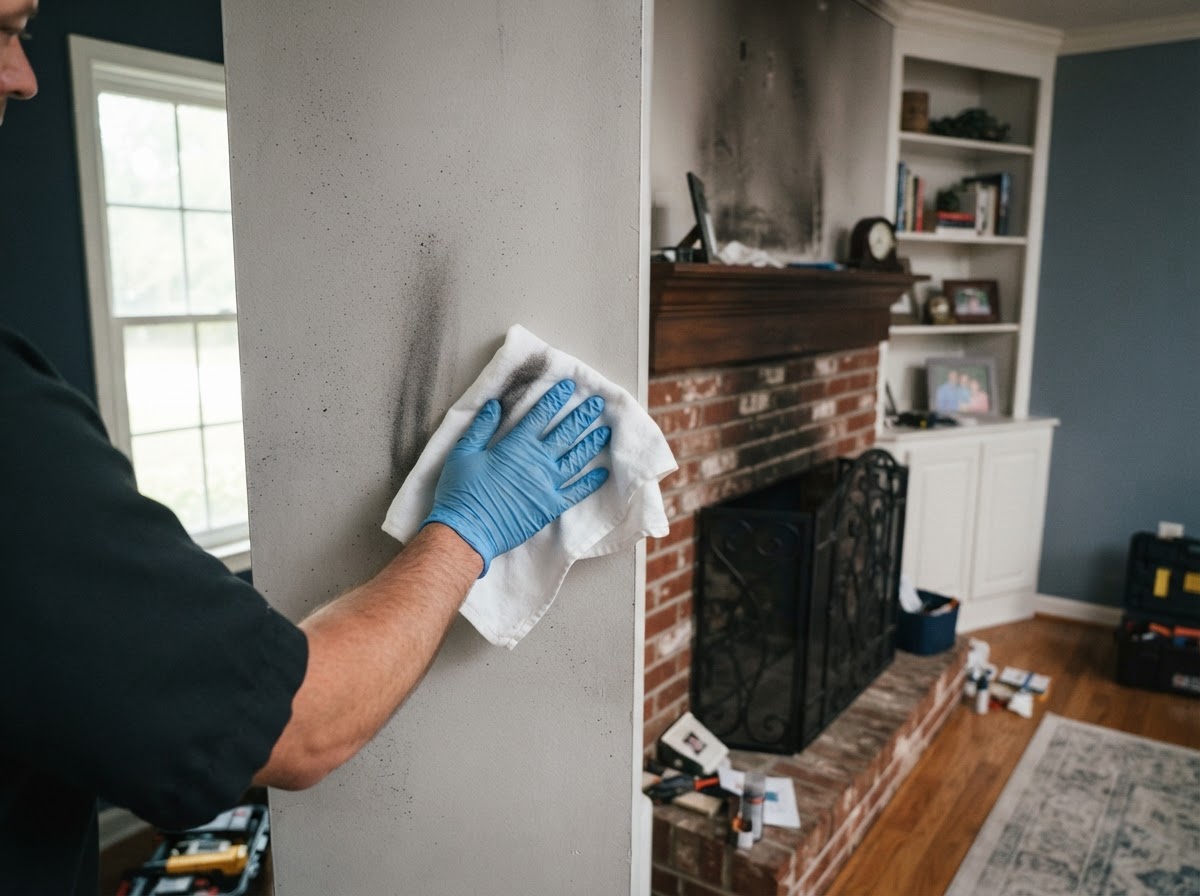
Kitchen and electrical fires are among the more common fire events in mid-century homes, and the smoke that follows can move through original ductwork and settle across living areas. A grease fire leaves a different residue than a protein or electrical fire, and the wrong cleaning method can set soot into walls and ceilings rather than lift it. Assessment helps distinguish the type of residue and the appropriate cleaning approach.
Smoke odor reduction is separate from surface soot cleaning, and we do not promise complete, permanent odor elimination. Electrical safety after any electrical fire is a matter for a qualified electrician; structural integrity is a matter for a qualified professional. We do not represent restoration work as establishing safe occupancy on its own.
Condensation and Aging Ductwork
Aging ductwork and the temperature swings of a mid-century home's cooling season can produce condensation that keeps surfaces and cavities damp enough for mold to establish — particularly around registers, in closets, or where cool air meets warm, humid Montgomery air. Mold assessment is about locating that moisture source and the extent of affected materials; remediation is the separate work of removing affected materials and correcting the condition so it does not return.
We do not identify mold species by color or diagnose health effects. Per CDC guidance, the color of mold does not indicate its hazard, and all mold should be addressed with respect to potential health effects and removal. An HVAC source may also involve a qualified contractor; the assessment helps identify where that coordination belongs.
Small Commercial and Rental Properties
Capitol Heights includes some small commercial and rental properties, where a loss can affect more than one unit or tenant. Those situations raise documentation, access, and coordination questions that a single-family residence may not, and the scope may need to account for shared systems and occupancy. Where a commercial loss is involved, a commercial-focused conversation may be appropriate.
We do not imply that every specialized service — biohazard cleanup, regulated remediation, or reconstruction — is available without confirmation. Where a scope requires a qualified trade or a regulated specialist, the assessment helps identify who needs to be involved.
What Happens When You Request an Assessment
A request lets you describe the issue, the property location, the service category, and the urgency. We review that information under our actual workflow — we do not promise dispatch, a specific inspection time, acceptance, or a same-day appointment until coverage and scheduling are confirmed. An inquiry is a request for contact and assessment, not a confirmed appointment or a guarantee of service.
For a Capitol Heights address, please provide the street location rather than the neighborhood name. If an appliance, ductwork, or the slab is involved, noting that helps frame the appropriate assessment and whether a plumber or HVAC contractor should be coordinated.
Capitol Heights Restoration Assessment Questions
Do you have a crew or office in Capitol Heights?
My water heater failed on a slab — what is involved?
Can smoke from a kitchen fire travel through my ductwork?
Is condensation in my ductwork causing mold?
Do you guarantee same-day or 24-hour service in Capitol Heights?
What should I include when I request an assessment?
Does an inquiry guarantee you will take the job?
Restoration Concerns at a Capitol Heights Property?
If your Capitol Heights property has an appliance leak, kitchen-fire smoke, or condensation-related moisture, tell us the address, what happened, and which systems or materials are involved. We can help frame the appropriate assessment and confirm whether service is available for your location.