What to Document After Water or Fire Damage in Montgomery
After water or fire damage, the records you keep can support both an insurance claim and a restoration scope. The most useful documentation is gathered before any mitigation begins — when it is safe to do so — and includes photographs, a video walkthrough, a written timeline, an inventory of affected areas and contents, and a record of correspondence. Documentation supports a claim, but it does not guarantee coverage, approval, or reimbursement, which depend on the policy and the insurer. This guide explains what to record and why. We do not provide public-adjusting or legal services.
What the Question Involves
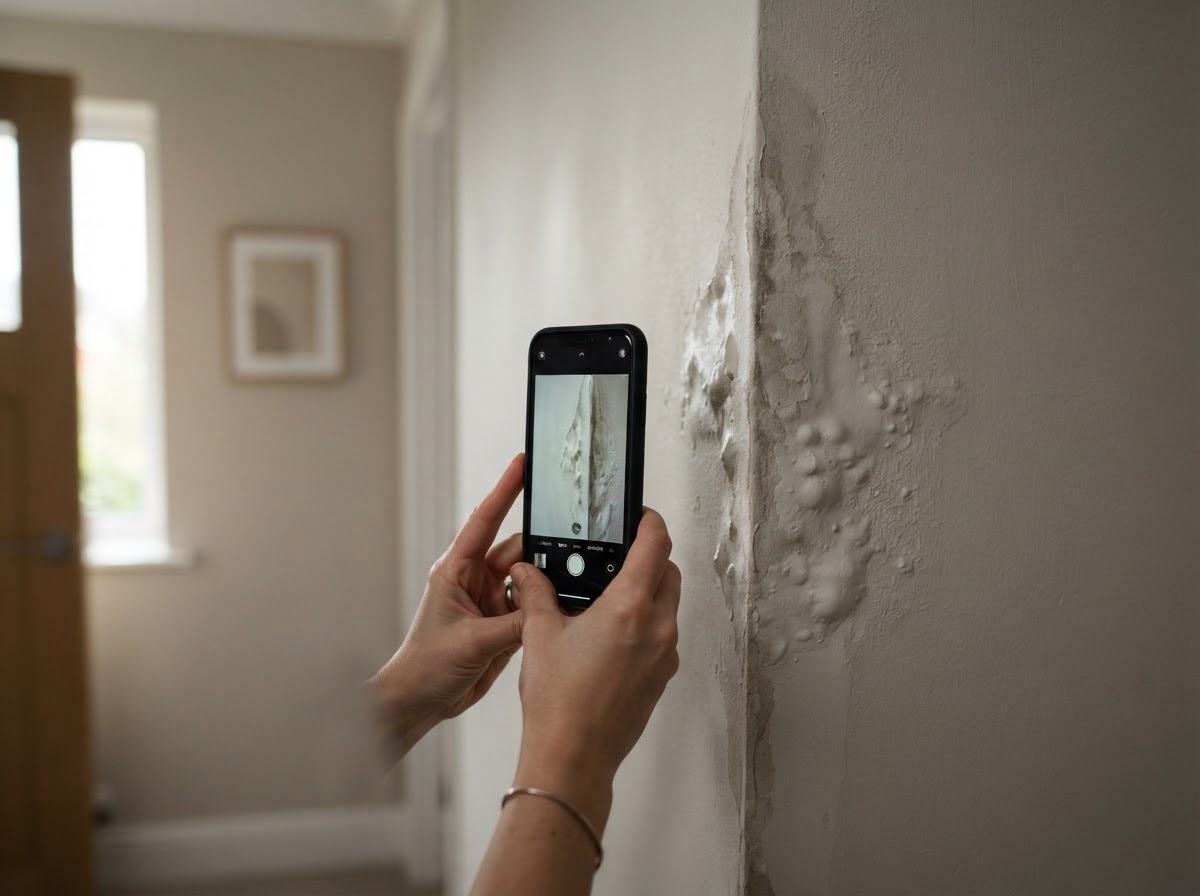
Documentation is the evidence of what happened, when, and to what extent. After a loss, an insurer and a restoration provider both rely on records to understand the scope. Once mitigation begins — water is extracted, damaged materials are removed, contents are moved — the original condition becomes harder to reconstruct from memory. Photographs and video taken before that work preserve what was there.
Two kinds of records matter. Condition records show the damage as it existed at the time of the loss: standing water, stained ceilings, soot-covered walls, affected contents. Process records show what was done in response: when the source was stopped, when drying began, what was removed, and correspondence with the insurer or contractor. Both support a claim, but neither determines the coverage decision, which remains the insurer's under the policy terms.
A useful principle is to document more than you think you will need. It is easier to set aside an extra photograph than to recover a detail you did not record. The goal is an accurate, dated record of the property's condition and the steps taken — not a characterization of cause, which may require qualified evaluation.
Key Facts and Decision Factors
The most useful documentation includes several elements. Photographs from multiple angles of each affected area, including wide shots that show the room context and close shots of specific damage. Video walkthroughs that capture the full scope in a continuous take, narrated with the date and what is being shown. A written timeline of when the damage was discovered, when the source was stopped, and when mitigation began.
An inventory of affected areas and contents — room by room, noting materials (drywall, flooring, insulation) and personal property, with photographs where possible. Receipts and estimates for any emergency measures, temporary repairs, or lodging if the home is uninhabitable. Correspondence records — the claim number, adjuster contact, and a log of calls and emails with the insurer.
A factor that affects usefulness is timing. Records gathered before mitigation begins are the most valuable because they show the original condition. After that, the priority shifts to documenting the mitigation process itself — what was removed, what was dried, and what was discarded — so the scope can be reconstructed. We do not recommend delaying safety measures to take photographs; where conditions are unsafe, safety comes first.
Practical Property Considerations
A few practical questions help frame the documentation effort. Is it safe to enter the affected area — free of standing water near electrical outlets, structural concerns, or active fire or gas hazards? If not, documentation waits until the area is safe or is handled from a safe vantage point. Has the source been stopped where safe to do so?
It helps to keep documentation organized in one place — a single folder of photographs, a written timeline, and a correspondence log — so it can be provided to the insurer or a restoration provider as a coherent record. Backing up photographs and video to cloud storage protects against loss of a device. Asking a restoration provider how it documents scope can clarify what additional records the claim will need.
We do not recommend that occupants enter standing water near electrical outlets or appliances, climb onto a fire-damaged roof, or disturb suspected microbial growth or hazardous materials without appropriate safeguards. Where conditions are unsafe, the responsible utility, the fire department, or a qualified trade is the appropriate first contact; a restoration company is not a substitute for emergency response.
Montgomery and Alabama Context
In Montgomery, documentation supports a claim under an Alabama homeowners policy, and the Alabama Department of Insurance provides consumer information on the claims process. The Department does not determine individual coverage decisions — those remain between the policyholder and the insurer under the policy terms — but it is a resource for understanding your rights and the general process.
Central Alabama's storm and humidity patterns can produce water events that affect several areas of a property at once, which makes a room-by-room inventory particularly useful. The local context does not change what to document, but it can affect how many areas need to be recorded. We do not claim that every Montgomery property experiences the same conditions, and we do not invent local damage statistics.
Limitations and Common Misunderstandings
A common misunderstanding is that thorough documentation guarantees a paid claim. It does not. Records support the claim and establish scope, but the coverage decision depends on the policy, the cause of the loss, and the insurer's determination. Documentation strengthens a claim; it does not decide it.
Another is that a restoration provider's records are a substitute for the owner's. They are complementary. A provider documents its scope of work, but the owner's own photographs and timeline of the original condition are independent evidence that predates any mitigation. Both are useful, and neither alone is complete.
A third is that documentation should characterize the cause. It should not. Records should describe what is observed — the visible damage, the timing, the steps taken — without asserting a cause that may require qualified evaluation. We do not recommend altering loss dates, describing damage inaccurately, or concealing facts; accurate records are the foundation of a credible claim. We do not provide public-adjusting or legal services.
Documentation Questions in Montgomery
What should I photograph first after water or fire damage?
Should I take video as well as photographs?
What should the written timeline include?
Do I need an inventory of affected contents?
Does good documentation guarantee my claim is approved?
Is it safe to document before the source is stopped?
Can a restoration company document the loss for me?
Request a Restoration Assessment for Your Montgomery Property
If you have water or fire damage in Montgomery, tell us what you have documented, when the damage occurred, and which areas are affected. We can frame the restoration scope and the records that support a claim — without determining your coverage, without promising approval, and without providing public-adjusting or legal services.