Mitigation vs. Restoration: What's the Difference in Montgomery?
Mitigation and restoration are two distinct phases of a damage project, and confusing them leads to mismatched expectations. Mitigation is the urgent work that stops ongoing damage and stabilizes the property — water extraction, controlled drying, and containment. Restoration is the broader work that returns the property to its pre-loss condition — repairs, material replacement, and reconstruction. A third activity, source repair, is performed by a qualified trade and is separate from both. This guide explains the difference and why it matters for planning. We do not promise that one provider performs every phase.
What the Question Involves
The terms describe different goals. Mitigation aims to limit damage — to stop it from getting worse and to stabilize the property so further harm does not occur while the claim and the repair are planned. Restoration aims to repair damage — to return the property to the condition it was in before the loss. The two are sequential in most projects: mitigation first, then restoration, with source repair often in between or alongside.
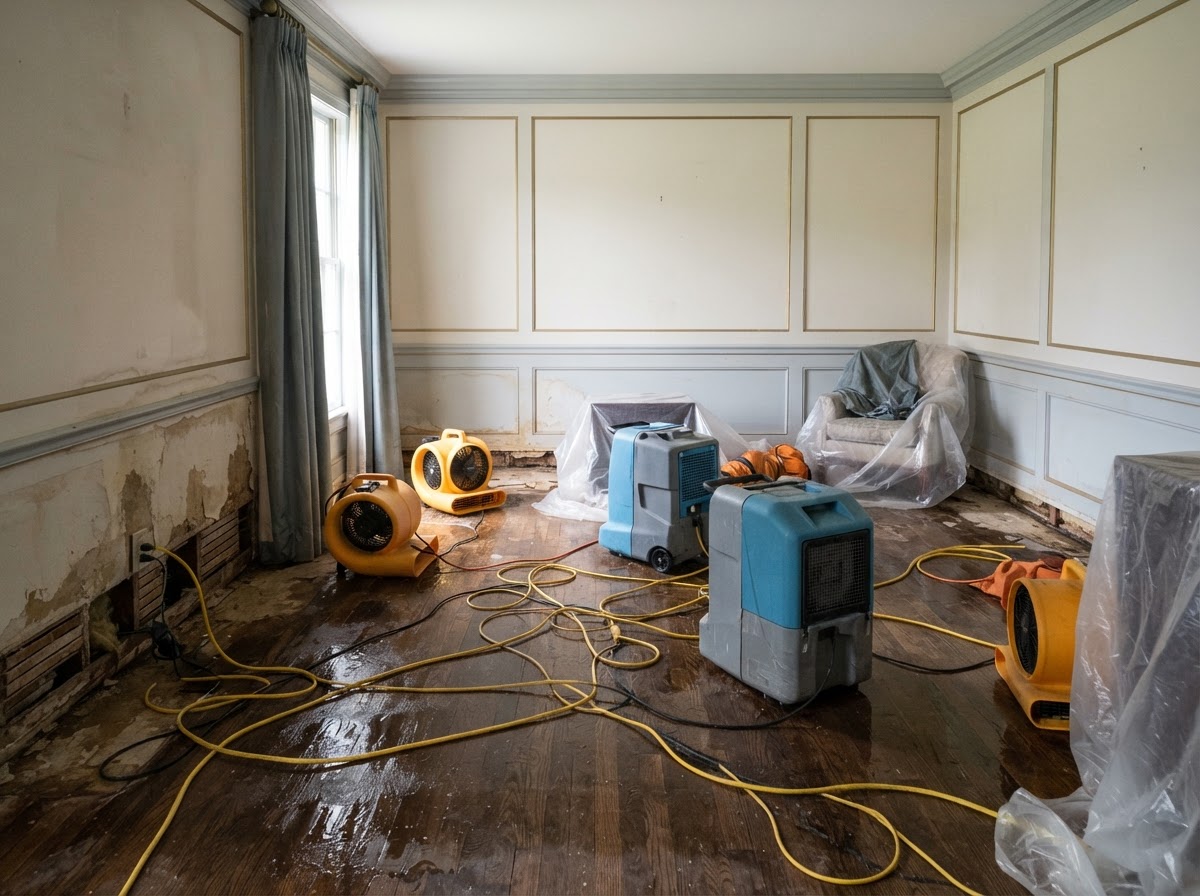
Mitigation work typically includes water extraction, the placement of drying equipment (air movers and dehumidifiers), moisture assessment, removal of saturated but non-salvageable materials such as wet carpet pad or damaged drywall, and containment where contamination is a concern. The goal is a dry, stable property. Restoration work typically includes reinstalling drywall, replacing flooring, repainting, and reconstructing damaged assemblies — the work that makes the property livable or usable again.
Source repair is a third, separate activity. A burst pipe, a roof leak, a failed appliance, or a plumbing leak is repaired by the qualified trade responsible for that system — a plumber, a roofer, an HVAC technician, or an electrician. Mitigation does not repair the source, and restoration does not either; both assume the source has been stopped or repaired. We do not imply that a restoration provider performs these trade repairs unless its capability is verified.
Key Facts and Decision Factors
Several factors shape how the phases relate. The first is timing: mitigation is time-sensitive because wet materials deteriorate and microbial growth can begin within a short window, so drying usually starts quickly after the source is stopped. Restoration is less time-sensitive and is typically planned after the scope of damage is fully understood and the claim is underway.
The second is scope: mitigation addresses the affected materials and the moisture condition; restoration addresses the repairs needed to return the property to its pre-loss condition. The two scopes are related but not identical — a property can be fully mitigated (dry and stable) but still need extensive restoration (replacing the drywall and flooring that were removed).
The third is who performs each phase: mitigation is often performed by a restoration provider; restoration is often performed by a contractor or trades, sometimes the same provider and sometimes different ones. Source repair is performed by the qualified trade for the system involved. The fourth is insurance treatment: many policies distinguish mitigation (often encouraged as the duty to prevent further damage) from repairs, and coverage can differ between them. Coverage depends on the specific policy and event.
Practical Property Considerations
A few practical questions help frame the phases. Has the source been stopped or repaired, and by whom? Is the property dry and stable, or is moisture still present? What repairs are needed to return it to its pre-loss condition, and who will perform them? What documentation exists for each phase?
It helps to understand that drying the property is not the same as restoring it. A property can be fully dried and still need significant reconstruction, because mitigation often removes damaged materials that restoration then replaces. Asking a restoration provider whether it performs both mitigation and restoration — or only mitigation — clarifies what to expect and what additional contractors may be needed.
We do not recommend that occupants enter standing water near electrical outlets, attempt to operate drying equipment in unsafe conditions, or disturb suspected microbial growth without appropriate safeguards. Where the source is an active leak, the responsible utility or a qualified trade is the appropriate first contact; mitigation follows once the source is stopped and the area is safe.
Montgomery and Alabama Context
In Montgomery, the distinction between mitigation and restoration also affects permitting. Mitigation — drying and removing damaged materials — generally does not require a building permit. Restoration — replacing framing, wiring, plumbing, or mechanical systems — typically does, and the City of Montgomery requires permits for most building, electrical, plumbing, gas, and mechanical projects. The phases can have different regulatory profiles even within a single project.
Central Alabama's humid climate can make timely mitigation particularly important, because moisture that lingers in materials can lead to microbial growth and further damage. The climate does not change the definition of the phases, but it can affect how quickly mitigation needs to begin after the source is stopped. We do not claim that every Montgomery property shares the same conditions, and we do not promise a specific drying timeline.
Limitations and Common Misunderstandings
A common misunderstanding is that "restoration" includes the source repair. It does not. Repairing the burst pipe, the roof leak, or the failed appliance is a separate trade activity. A restoration provider may coordinate with that trade, but it does not perform the repair unless its capability is verified.
Another is that a dry property is a restored property. It is not. Mitigation produces a dry, stable property; restoration produces a repaired one. A property can be fully mitigated and still need extensive restoration. Confusing the two can lead to surprise costs and scheduling gaps when the reconstruction phase begins.
A third is that one provider always performs both phases. Sometimes a single provider offers mitigation and restoration; sometimes they are different contractors. Source repair is a third party in either case. We do not imply that one provider performs every phase, and we do not guarantee a specific restoration outcome or timeline. We do not promise insurance coverage for any phase.
Mitigation and Restoration Questions in Montgomery
What is the difference between mitigation and restoration?
Does mitigation include repairing the source of the water?
Is a dry property the same as a restored property?
Does the same company do both mitigation and restoration?
Does mitigation require a building permit in Montgomery?
How soon should mitigation begin after a water loss?
Does insurance cover mitigation and restoration the same way?
Request a Restoration Assessment for Your Montgomery Property
If you have water, fire, or mold damage in Montgomery, tell us what happened and the current condition of the property. We can frame where mitigation ends, what restoration may involve, and where source repair by a qualified trade fits — without implying one provider performs every phase, without promising a timeline, and without determining your insurance coverage.