Water, Fire & Mold Damage Restoration in Hope Hull, Alabama
Hope Hull is an unincorporated community in southern Montgomery County, near the Lowndes County line, and its rural-urban interface setting shapes the restoration questions here. The right approach to water, fire, or mold damage depends on which materials are affected, whether the property is on municipal utilities or well water and septic, and how far moisture or smoke has migrated. This page describes the kinds of assessment and coordination a Hope Hull property owner may want evaluated — and how to request it through our Montgomery assessment process. Coverage and timing for this community must be confirmed by inquiry rather than assumed from the area name.
What Hope Hull Property Owners Often Evaluate
Hope Hull's position as an unincorporated community at the rural-urban interface south of Montgomery is the detail that most often shapes a restoration question here. Properties in this area can range from newer subdivision-style homes to older rural residences, and some rely on well water and septic systems rather than municipal utilities — which changes what a water-damage source can look like. Being near the Lowndes County line also means a property's actual jurisdiction can differ from its mailing address, so the correct place to confirm a permitting or code question depends on the specific location.
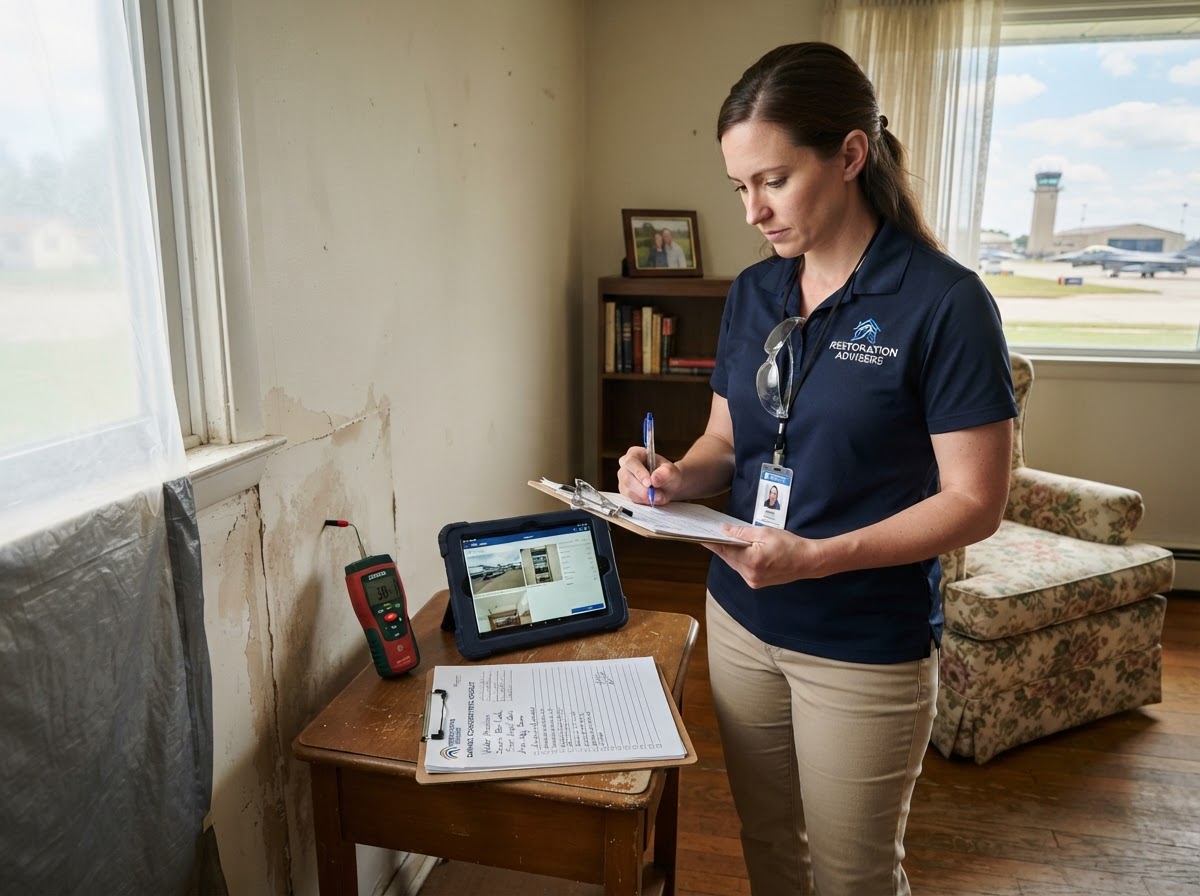
It helps to separate the visible sign from the likely concealed condition, and to separate a restoration question from a source question. A damp floor or musty odor can mean a plumbing source, a septic or drainage condition, or moisture migrating through the building envelope — and telling them apart is part of assessment. Because Hope Hull is unincorporated, the jurisdiction for any permitting or code question is Montgomery County rather than an incorporated city, and a property near the county line may need its exact jurisdiction confirmed.
Water Damage in a Rural-Urban Interface Community
Where water damage is involved, the first questions are usually about the source, the affected materials, and how far moisture has migrated. Water extraction is the work of removing standing water; structural drying is the separate, longer process of drawing moisture out of wet building materials and confirming with monitoring that they are actually dry rather than dry to the touch. On a property at the rural-urban interface, the source question can involve municipal plumbing, a well-water system component, a septic condition, or exterior drainage — and each requires a different response.
A plumbing or well-water source is the work of a qualified plumber; a septic condition is the work of a qualified septic trade; a drainage or exterior-source issue is typically addressed by a qualified trade or grading specialist. Assessment, extraction, drying, and affected-material removal are the restoration work we can help frame. We do not represent well-water testing, septic evaluations, or flood-zone determinations; those belong to the appropriate qualified testing and official mapping resources. Drying timelines are not guaranteed — they depend on the materials and conditions confirmed through monitoring.
Fire and Smoke Damage Considerations
Fire-related damage in a Hope Hull home is rarely limited to the room of origin. Smoke residue and odor travel through ducted HVAC and settle into textiles, cabinetry, and porous surfaces throughout the structure. On a property with outbuildings or larger lots, a fire that started in one structure can raise separate scope questions where it spread to or affected a second. The residue from a protein fire requires a different cleaning approach than dry soot from a fast, hot fire, and the wrong method can set residue rather than lift it.
Smoke odor reduction is its own process, separate from cleaning surface soot and from confirming a property is safe to occupy. We do not promise complete, permanent odor elimination — outcomes depend on how deeply residue penetrated, which materials are affected, and whether charred or saturated materials are removed. Electrical and structural safety after a fire are matters for qualified electricians and structural professionals, not for restoration work alone.
Mold, Moisture, and the Source
Mold is a moisture problem before it is anything else. In a community with a mix of older rural residences and newer homes, crawlspace and foundation moisture, drainage that keeps the perimeter damp, or condensation in aging ductwork can keep materials damp long enough for growth to take hold before it is visible. Mold assessment is about identifying the extent and the moisture source; remediation is the separate work of removing affected materials and correcting the underlying moisture condition so it does not return.
We do not identify mold species by color, diagnose health effects, or promise permanent prevention. Per CDC guidance, the color of mold does not indicate how hazardous it is, and all mold should be addressed with respect to potential health effects and removal. What we can help with is framing the moisture source, the affected materials, and the appropriate next step — including, where the source is a septic or drainage condition, a qualified trade to address it.
Residential and Small-Property Considerations
Hope Hull is largely residential, so most restoration questions here concern single-family homes and outbuildings, with some small-commercial property along the area's travel corridors. A loss affecting an outbuilding or a small business raises documentation, access, and coordination questions that can differ from a standard residential loss, particularly where the property is rural or includes more than one structure. Where a commercial or multi-structure loss is involved, the scope, documentation, and sequencing may warrant a commercial-focused conversation.
We do not imply that every specialized service — biohazard cleanup, regulated remediation, or reconstruction — is available without confirmation. Where a scope requires a qualified trade or a regulated specialist, the assessment helps identify who needs to be involved, and any permitting question belongs to Montgomery County authorities — or, for a property that actually sits across the line, Lowndes County authorities — rather than an incorporated city.
What Happens When You Request an Assessment
When you submit a request, you describe the issue, the property location, the relevant service category, and the urgency. That information is reviewed according to our actual workflow — we do not promise dispatch, an inspection time, acceptance, or a same-day appointment until coverage and scheduling are confirmed. A submitted inquiry is a request for contact and assessment, not a confirmed appointment or a guarantee of service.
The most useful details to include are when the damage was discovered, which areas and materials are affected, whether the source has been stopped, and whether the property is occupied. For a Hope Hull address, please provide the actual street location and note whether the property is on a well and septic system — the address, and whether the property is in Montgomery County or just across the line in Lowndes County, is what determines whether it is within our service reach and which jurisdiction applies to any related work. If your concern is drainage-related, please describe what you observed rather than assuming a cause.
Hope Hull Restoration Assessment Questions
Do you have an office in Hope Hull?
Hope Hull is unincorporated. Who handles permitting here?
My property is on a well and septic. Does that affect the water-damage assessment?
Does water extraction include structural drying?
My outbuilding and my home were both affected by a fire. Is that one scope?
Can you tell me whether the mold in my home is dangerous?
Is same-day or 24-hour service guaranteed in Hope Hull?
Restoration Concerns at a Hope Hull Property?
If your Hope Hull property has water, fire, or mold damage — or you are unsure whether what you are seeing warrants assessment — tell us the address, what happened, and when. We can help frame the appropriate next step and confirm whether service is available for your specific location.