Water, Fire & Mold Damage Restoration in Arrowhead, Alabama
Arrowhead is a split-level and two-story Montgomery residential area, and the restoration questions here tend to follow that building profile. A second-floor supply-line failure can run water down through stair framing and ceiling cavities before it shows on the level below, and smoke moving through a multi-level HVAC system can distribute residue far from the room of origin. This page describes the kinds of water, fire, and mold assessment and coordination an Arrowhead property owner may want evaluated — and how to request it through our Montgomery assessment process. Coverage and timing for this community must be confirmed by inquiry rather than assumed from the neighborhood name.
What Arrowhead Property Owners Often Evaluate
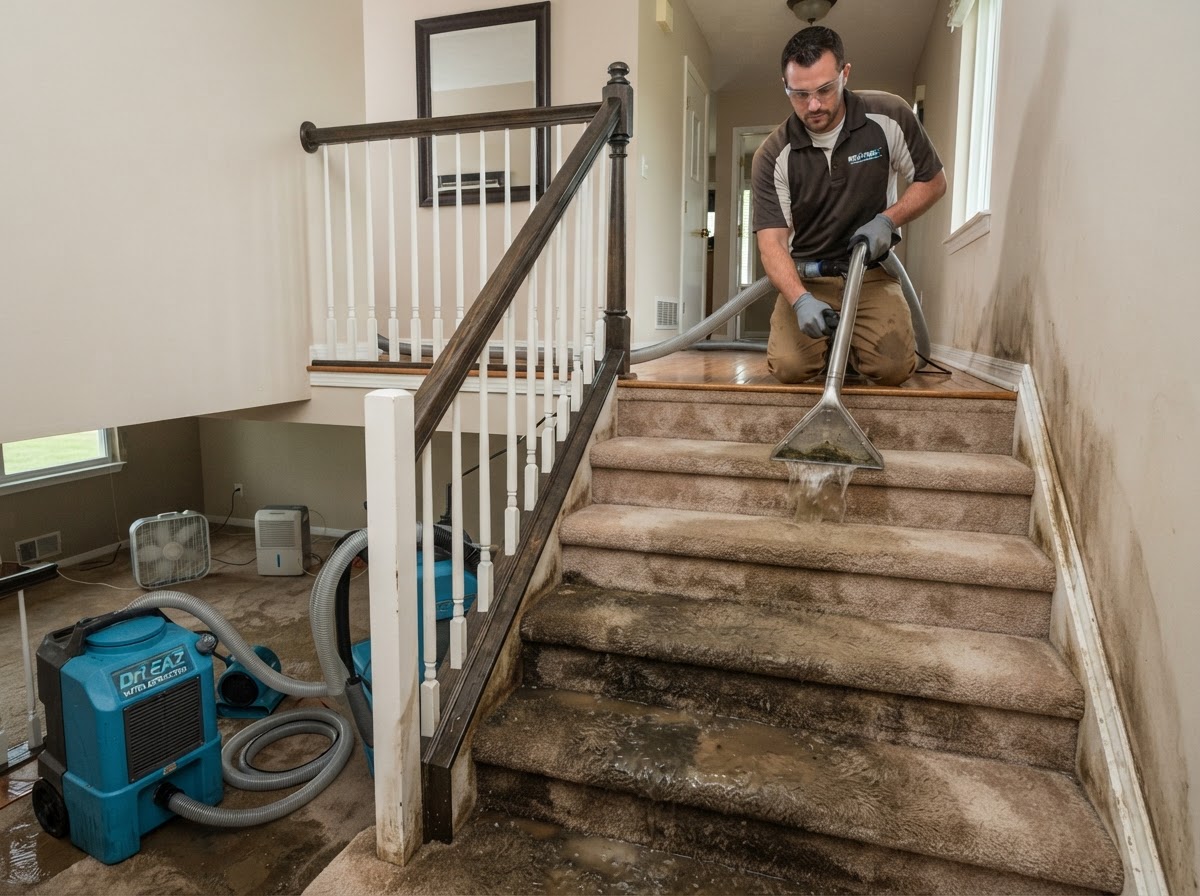
Split-level and two-story homes create restoration considerations that a single-story home does not. Water that starts on an upper level can travel down framing, pool in ceiling cavities, and wick along stair stringers before it is visible on the level below. Multi-level HVAC systems can carry smoke residue and odor between floors and distribute it through supply and return runs far from the room of origin. Lower-level and mid-level finishes can each hold moisture differently after a loss.
It helps to separate the level where the sign appeared from the level where the source began. A stain on a lower-level ceiling often means a leak one level up. Smoke odor in an upper room can mean residue traveled through the HVAC system from a lower-level fire. These distinctions are why an assessment is framed around the actual property and a moisture path rather than a generic checklist.
Water Damage in a Split-Level Montgomery Community
Where water damage is involved, the first questions are usually about the source, the affected materials, and how far moisture has migrated between levels. Water extraction is the work of removing standing water; structural drying is the separate, longer process of drawing moisture out of wet building materials and confirming with monitoring that they are actually dry rather than dry to the touch. The two are distinct, and moisture that has traveled down framing can remain in ceiling cavities after standing water is gone.
A second-floor supply line, an upstairs bathroom leak, or a roof leak that ran down a wall cavity can each leave moisture in framing and drywall a level below the visible sign. Identifying the source and stopping it is typically handled by a qualified plumber or roofer, while assessment, extraction, drying, and affected-material removal are the restoration work we can help frame. Drying across levels is confirmed by monitoring on each affected level, not by appearance.
Fire and Smoke Damage Considerations
Fire-related damage in a split-level or two-story home can move between floors through the HVAC system. Smoke residue and odor travel through supply and return ductwork, settle into textiles and carpet on levels far from the fire, and penetrate porous surfaces throughout the home. A kitchen or electrical fire can leave soot that requires a different cleaning approach than the greasy residue from a protein fire, and the wrong cleaning method can set soot rather than lift it.
Smoke odor reduction is its own process, separate from cleaning surface soot and from confirming a property is safe to occupy. We do not promise complete, permanent odor elimination — odor outcomes depend on how deeply residue penetrated, which materials are affected, and whether charred or saturated materials are removed. Electrical and structural safety after a fire are matters for qualified electricians and structural professionals, not for restoration work alone.
Mold, Moisture, and the Source
Mold is a moisture problem before it is anything else. In a split-level home, a slow upper-level leak that travels down framing can keep a ceiling cavity or a lower-level wall damp long enough for growth to take hold behind drywall before it is visible. Mold assessment is about identifying the extent and the moisture source; remediation is the separate work of removing affected materials and correcting the underlying moisture condition so it does not return.
We do not identify mold species by color, diagnose health effects, or promise permanent prevention. Per CDC guidance, the color of mold does not indicate how hazardous it is, and all mold should be addressed with respect to potential health effects and removal. What we can help with is framing the moisture path, the affected materials, and the appropriate next step.
Commercial and Multi-Unit Property Considerations
Arrowhead also includes small commercial and multi-unit residential properties, where restoration questions can differ from a single-family home. A loss affecting a shared wall, a common-area plumbing failure, or a multi-unit building raises documentation, access, and coordination questions that a single residence may not. Where a multi-unit loss is involved, the scope, documentation, and sequencing may warrant a commercial-focused conversation.
We do not imply that every specialized service — biohazard cleanup, regulated remediation, or reconstruction — is available without confirmation. Where a scope requires a qualified trade or a regulated specialist, the assessment helps identify who needs to be involved.
What Happens When You Request an Assessment
When you submit a request, you describe the issue, the property location, the relevant service category, and the urgency. That information is reviewed according to our actual workflow — we do not promise dispatch, an inspection time, acceptance, or a same-day appointment until coverage and scheduling are confirmed. A submitted inquiry is a request for contact and assessment, not a confirmed appointment or a guarantee of service.
The most useful details to include are when the damage was discovered, which levels and materials are affected, whether the source has been stopped, and whether the property is occupied. For an Arrowhead address, please provide the actual street location rather than the neighborhood name, since the address is what determines whether the property is within our service reach.
Arrowhead Restoration Assessment Questions
Do you have an office in Arrowhead?
Water came through my lower-level ceiling. Where did it start?
Does water extraction include structural drying?
Why does my upper level smell like smoke when the fire was downstairs?
Does smoke odor removal mean the property is safe to occupy?
Who fixes the plumbing or roof source?
Is same-day or 24-hour service guaranteed in Arrowhead?
Restoration Concerns at an Arrowhead Property?
If your Arrowhead-area property has water, fire, or mold damage — or you are unsure whether what you are seeing warrants assessment — tell us the address, what happened, and when. We can help frame the appropriate next step and confirm whether service is available for your specific location.